The Translation Problem: Why Environmental Science Breakthroughs Stall Before Reaching Industry—and What Professional Gatherings Can Do About It
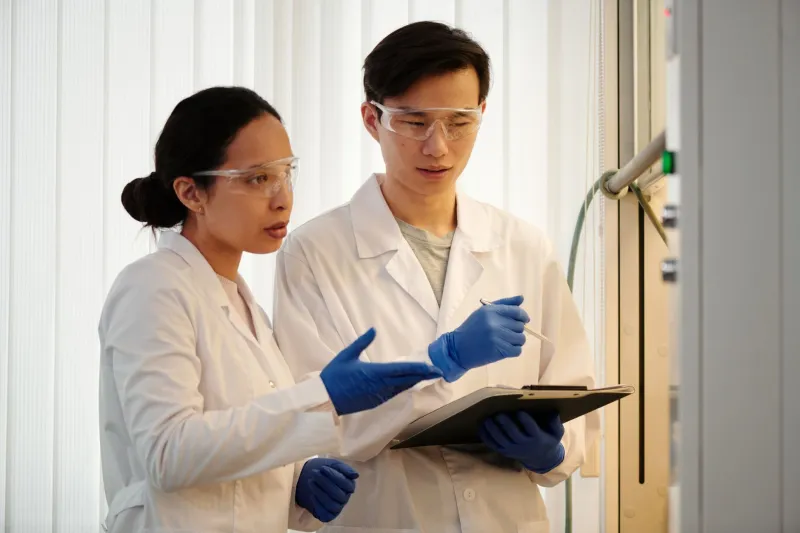
Consider a scenario familiar to anyone who has spent time on both sides of the academic-industry divide. A research team at a major US university publishes a peer-reviewed study demonstrating a novel catalytic process capable of degrading persistent organic pollutants at a fraction of the energy cost of conventional methods. The paper earns citations, generates conference presentations within academic circles, and perhaps attracts a small follow-on grant. Three years later, no industrial facility has adopted the technology. The researchers have moved on to the next project. The potential application sits, documented but dormant, in a journal that most plant engineers will never read.
This is not an exceptional story. It is the norm. And the consequences for environmental progress are significant.
Two Worlds With Different Clocks
Academia and industry operate on fundamentally different timescales and under fundamentally different incentive structures. University researchers are evaluated—for tenure, promotion, and grant competitiveness—primarily on publication output, citation metrics, and the novelty of their scientific contributions. The question of whether a discovery can be manufactured at scale, integrated into existing infrastructure, or justified against an industrial cost-benefit analysis is rarely central to academic reward systems.
Industry, by contrast, operates under quarterly performance pressures, regulatory compliance obligations, capital allocation constraints, and risk tolerance thresholds that academic institutions simply do not face. A chemical plant manager considering a process modification must weigh not only the technical promise of a new approach but also implementation costs, worker retraining requirements, regulatory approval timelines, potential production disruptions, and the career risk associated with championing an unproven technology.
Neither orientation is wrong. Both serve legitimate purposes. But their structural incompatibility creates a valley of death through which promising environmental technologies routinely disappear.
The Problem Is Systemic, Not Personal
It would be convenient to attribute the translation gap to individual failures—researchers who do not communicate accessibly, or industry professionals who are too risk-averse to engage with emerging science. The reality is more structural and, paradoxically, more tractable.
A 2023 analysis examining technology transfer outcomes in the environmental sciences found that the most significant predictor of successful academic-to-industry translation was not the quality of the underlying research, nor the commercial potential of the technology, but rather the existence of prior personal or professional relationships between the researchers involved and potential industrial adopters. In other words, who you know matters as much as what you know—a finding that is simultaneously unsurprising and deeply instructive.
The implication is clear: creating more structured opportunities for meaningful professional interaction between academic researchers and industry practitioners is not a peripheral amenity. It is a core mechanism for accelerating environmental progress.
What Gets Lost in the Journal-to-Boardroom Journey
Peer-reviewed literature, for all its rigor and value, is an incomplete medium for technology transfer. Scientific papers communicate findings with precision but rarely address the contextual factors that determine industrial adoptability. They do not explain how a process performs under the variability conditions of a real manufacturing environment. They do not address the regulatory approval pathway for a novel chemical process. They do not quantify implementation costs with the specificity that a capital expenditure proposal requires. And they do not convey the tacit knowledge—the practical insights that researchers accumulate through years of experimental work—that often determines whether a technology succeeds or fails outside the laboratory.
This tacit knowledge dimension is critically underappreciated. When an experienced researcher presents their work in a conference setting, answers questions from skeptical practitioners, and engages in hallway conversations with engineers who have tried similar approaches, an information transfer occurs that no journal article can replicate. The researcher learns which real-world constraints their technology must address. The practitioner gains confidence in the technology's potential and begins imagining its application within their specific operational context. Both parties leave with a more complete picture than either could have constructed independently.
The Structural Value of Professional Conferences
This is precisely where professional conferences, when designed and executed thoughtfully, provide irreplaceable value. The argument for conferences is sometimes made on networking grounds alone—an important but insufficient framing. The more compelling case is epistemological: conferences are among the very few institutional settings in which the full knowledge ecosystem surrounding a technology can be assembled in one place.
Consider what a well-structured environmental or chemical science conference brings together. Academic researchers presenting work at varying stages of maturity. Industry practitioners with deep operational expertise and specific, articulable problem sets. Regulatory professionals who understand the compliance landscape that any new technology must navigate. Technology investors and program managers who can identify and fund promising translation pathways. And—crucially—the informal conversation time in which these communities can engage outside the formal presentation structure.
The value created in those informal interactions is difficult to measure but empirically consequential. Survey data from technology transfer researchers consistently shows that a significant proportion of successful academic-industry collaborations trace their origins to a conference conversation rather than a formal partnership solicitation. The conference is not merely a venue for presenting completed work; it is an incubator for the relationships and shared understanding that make translation possible.
Designing Conferences That Actually Bridge the Gap
Not all professional gatherings fulfill this potential equally. Conferences that function primarily as academic paper presentations—with industry attendees as passive audiences—replicate rather than resolve the communication asymmetry that underlies the translation problem. Effective bridge-building requires deliberate design choices.
Programming that explicitly addresses implementation challenges, not only scientific findings, signals to industry practitioners that their concerns are central rather than peripheral. Panel discussions that pair academic researchers with industry counterparts—exploring the same problem from complementary vantage points—generate more productive dialogue than sequential presentations from within a single professional community. Structured networking sessions with facilitated introductions around specific technical problem areas can accelerate relationship formation that might otherwise take years to develop organically.
Workshop formats that invite industry practitioners to present their operational challenges—creating a reverse-translation dynamic in which researchers learn what problems most urgently need solving—can reorient academic work toward higher-impact directions. And mentorship programs that connect early-career researchers with experienced industry professionals help the next generation of environmental scientists develop the fluency in industrial constraints that their graduate training rarely provides.
A Call for Intentional Engagement
The environmental challenges confronting the United States—from PFAS contamination to greenhouse gas reduction to industrial waste management—are not suffering from a shortage of scientific knowledge. The peer-reviewed literature contains more actionable environmental science than the industrial sector has yet found ways to apply. What is in shorter supply is the connective tissue between discovery and deployment: the relationships, mutual understanding, and shared language that allow a laboratory finding to become an industrial practice.
Professional conferences and collaborative platforms are among the most powerful tools available for building that connective tissue. But realizing their potential requires that participants—researchers, practitioners, regulators, and funders alike—approach these gatherings with intentionality. Showing up is necessary but not sufficient. Engaging across disciplinary and professional boundaries, with genuine curiosity about the constraints and priorities of communities different from one's own, is what transforms a conference from a credential on a CV into a genuine accelerant for environmental progress.
The science is ready. The translation infrastructure needs investment—and that investment begins with the professional communities who understand both what is known and what remains to be done.