Prepared for the Wrong Job: How Chemistry Education Is Leaving Environmental Professionals Underskilled for Compliance-Era Careers
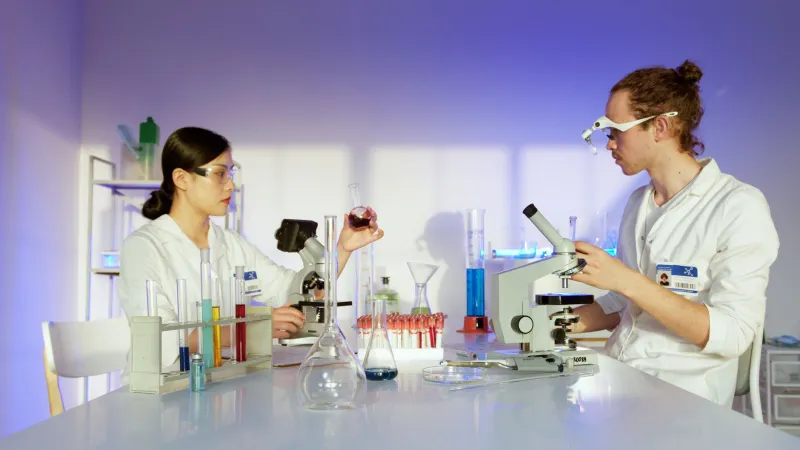
The chemistry degree has long been regarded as one of the more rigorous scientific credentials an undergraduate can earn. Years of quantitative coursework, laboratory technique, and mechanistic reasoning produce graduates with genuine analytical depth. Yet across environmental consulting firms, state regulatory agencies, and industrial compliance departments, a consistent frustration has taken hold: newly minted chemists are arriving in the workforce technically capable but professionally incomplete.
The skills they lack are not exotic. They are, by most accounts, foundational to the actual work of environmental science in 2024—regulatory interpretation, environmental data management software, stakeholder communication, and the cross-disciplinary literacy required to operate at the intersection of chemistry, law, and public health. These competencies are rarely taught in a traditional BS or MS chemistry program, and the consequences of that omission are rippling through hiring pipelines, compliance operations, and ultimately the quality of environmental protection itself.
What Hiring Managers Are Actually Seeing
Compliance directors at mid-sized environmental consulting firms describe a common intake experience. Candidates from strong chemistry programs can discuss reaction mechanisms and instrumental methods with precision. Ask them to interpret a state-issued corrective action order, navigate an electronic data deliverable format, or explain a remediation finding to a non-technical community group, and the conversation often stalls.
"We spend the first six to twelve months essentially running a parallel education," noted one compliance officer at a firm operating across multiple EPA regions. "The chemistry is there. The regulatory context is not."
This is not a complaint about individual candidates. It is a structural observation about what chemistry programs optimize for. Research universities build curricula around producing scientists who can contribute to the academic enterprise—graduate school, laboratory research, publication. The environmental compliance profession, which employs a substantial and growing share of chemistry graduates, requires a different cognitive toolkit, and that toolkit is largely assembled on the job rather than in the classroom.
The Specific Gaps That Keep Appearing
Conversations with hiring managers, agency staff, and early-career environmental scientists point to several recurring deficiencies.
Regulatory literacy tops nearly every list. The US environmental regulatory landscape—spanning the Clean Water Act, RCRA, CERCLA, TSCA, and their state-level analogs—is not merely a collection of rules. It is an interpretive framework that shapes every sampling decision, every laboratory method selection, and every remediation design. Understanding how regulations are structured, how they are amended through guidance documents and rulemakings, and how they vary across jurisdictions is essential knowledge for environmental practice. It is rarely covered in undergraduate or graduate chemistry programs.
Environmental data management is a close second. Modern environmental projects generate large, complex datasets that must be formatted, validated, and submitted in accordance with strict electronic data deliverable specifications. Software platforms such as EQuIS, EDGE, and various state-specific data submission portals are standard tools in the field. Chemistry graduates frequently encounter these systems for the first time after accepting their first professional position.
Stakeholder communication presents a subtler but equally consequential challenge. Environmental science does not occur in isolation from affected communities, regulatory reviewers, legal counsel, and corporate decision-makers. The ability to translate technical findings into accessible, defensible language—written and spoken—is a professional survival skill. Most chemistry programs cultivate scientific writing for peer audiences. The broader communication demands of environmental practice are a different discipline entirely.
Cross-disciplinary integration rounds out the most frequently cited gaps. Environmental problems are inherently interdisciplinary, requiring chemistry graduates to work alongside geologists, engineers, public health professionals, and attorneys. Graduates who have spent their academic careers within a chemistry department often struggle with the cognitive flexibility that collaborative, multi-disciplinary problem-solving requires.
The Perspective From Early-Career Scientists
Early-career environmental professionals tend to describe the preparation gap with a mixture of pragmatism and frustration. Many acknowledge that their academic training was rigorous and valuable. What they did not anticipate was the volume of professional knowledge that would need to be self-assembled in the first years of employment.
"I knew how to run an ICP-MS. I did not know what a Tier II report was, what a risk-based closure standard meant, or how to read a consent order," one environmental scientist with three years of field experience observed. "Those things are not hard to learn, but nobody teaches them before you need them."
Several early-career professionals also noted that graduate programs in environmental chemistry—while more applied than undergraduate curricula—still tend to emphasize research methodology over professional practice. Thesis work produces expertise in a narrow technical domain without necessarily building the regulatory and operational competencies that define the day-to-day reality of environmental compliance work.
What Universities Could Do Differently
The curricular reforms that would address this preparation gap are not radical. They do not require dismantling the analytical rigor that makes chemistry training valuable. They require expanding the definition of professional competency to include the regulatory and operational dimensions of environmental practice.
Several specific interventions merit serious consideration by chemistry and environmental science departments.
Integrating regulatory case studies into existing courses—particularly analytical chemistry, environmental chemistry, and laboratory methods sequences—would expose students to the decision-making context in which their technical skills will actually be applied. A unit on sampling design is more meaningful when students understand the regulatory standards that will govern data interpretation.
Developing professional practice courses as explicit degree requirements, rather than elective additions, would ensure that regulatory literacy, data management, and stakeholder communication receive structured attention. Some environmental science programs have moved in this direction; chemistry programs have been slower to follow.
Practicum partnerships with environmental consulting firms, state agencies, and industrial compliance departments would provide structured exposure to professional workflows before graduation. Internship programs exist, but their integration into degree requirements and their alignment with specific learning outcomes varies enormously.
The Role of Professional Societies
Universities cannot close this gap alone, nor should they be expected to. Professional societies operating at the intersection of environmental and chemical science are well-positioned to bridge the space between academic preparation and professional practice.
Certification programs that establish explicit competency standards for environmental compliance roles create a common language for what graduates should know. Mentorship programs that connect early-career scientists with experienced compliance professionals accelerate the knowledge transfer that currently happens informally and unevenly. Conference programming that explicitly addresses professional development alongside research advances signals to the field that operational competency is a scientific value, not merely a human resources concern.
The Stakes Are Not Merely Professional
The preparation gap in chemistry education is more than a workforce management inconvenience. Environmental compliance depends on professionals who can accurately interpret regulatory requirements, generate defensible data, and communicate findings clearly to those making consequential decisions about public health and environmental protection.
When graduates arrive underprepared for those responsibilities, the costs are borne not only by employers absorbing extended onboarding timelines but by the quality of the compliance work itself. A profession that consistently underinvests in the preparation of its practitioners is a profession that will periodically underperform when the stakes are highest.
The chemistry discipline has built extraordinary analytical capacity over generations of rigorous education. The question now is whether it will expand that educational vision to match the full scope of what environmental science in the United States actually requires.