Reagents Without a Home: Why Scientific Meetings Should Broker Chemical Reuse
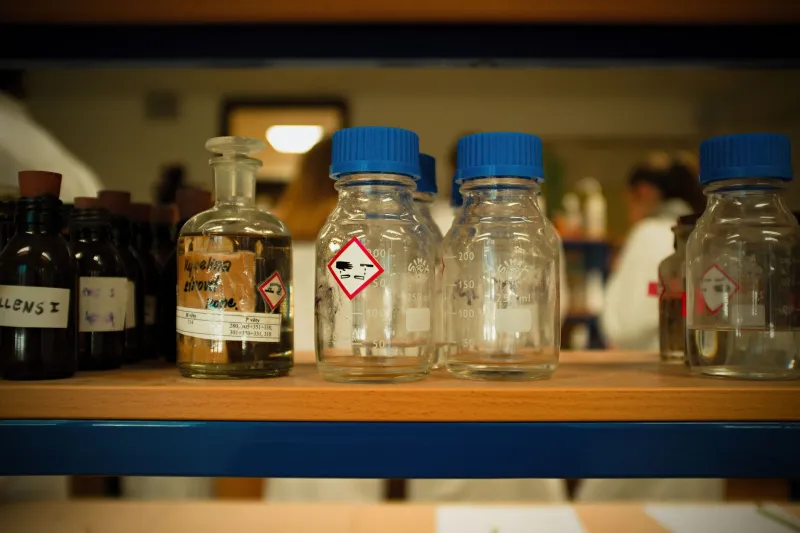
Every laboratory has a shelf like this: unopened bottles of a specialized reagent bought for a grant that changed direction, a surplus case of solvent ordered before a method was revised, or a high-purity standard that seemed essential at the time. The material is not waste in the ordinary sense. It is still usable, still costly, and still carrying the same hazard profile it had when it arrived. Yet it sits in a cabinet because disposing of it is expensive, transferring it is complicated, and no one has a reliable route to a lab that actually needs it.
This is not a marginal problem. It is a quiet inefficiency embedded in how US research institutions and industrial laboratories manage chemical inventories. Environmental health and safety offices spend considerable time tracking surplus chemicals, managing expiration dates, and arranging disposal. Principal investigators absorb the cost of unused stock. The environmental case for reuse is straightforward: every bottle that finds a second home is a bottle that does not need to be manufactured, shipped, and eventually incinerated or treated as hazardous waste.
The missing piece is a trusted marketplace. And that is where scientific conferences could play a useful role.
The Warehouse Problem
Most chemical reuse efforts today are local. A university may run an internal surplus chemical program. A company may have a site-level exchange. These programs work when the inventory is accurate and the demand is nearby. They fail when the material is specialized, the institution is small, or the potential user sits in another state. The result is a familiar pattern: valuable reagents age into disposal liabilities because the transaction cost of finding a legitimate user exceeds the apparent benefit.
Conferences already bring together the people who use these materials. A regional meeting of environmental chemists, analytical laboratories, and industrial hygiene professionals is a concentration of potential supply and demand. Attendees understand hazard classes, storage requirements, and analytical grades. They are also accustomed to professional verification. That combination is rare in ordinary online marketplaces.
Why Conferences
A conference is not a chemical distributor, and it should not pretend to be one. Its value is convening power and verification. Before the meeting, participating institutions could submit surplus chemical listings through a standard form: chemical identity, CAS number, grade, package size, condition, expiration date, hazard classification, storage requirements, and current location. A review committee composed of environmental health and safety professionals could screen listings for completeness and eligibility. At the meeting, a dedicated reuse board or session could connect buyers and sellers, with regional pickup arrangements handled afterward.
The model should be conservative. Only unopened, properly labeled materials with verifiable provenance should be listed. Materials with unknown history, compromised packaging, or unstable hazard characteristics should be excluded. The conference should not handle the physical transfer of chemicals on site unless a qualified institution has agreed to manage it. The point is to broker introductions and standardize information, not to turn a convention center into a warehouse.
Liability Is a Design Problem
Chemical reuse raises legitimate liability questions. Who warrants that the material is what the label says? Who is responsible if a receiving laboratory has an incident? Who confirms that transportation complies with US Department of Transportation rules and state requirements? These questions are not reasons to abandon reuse. They are reasons to design it carefully.
A workable framework would place responsibility on the transferring and receiving institutions, not on the conference. Each transaction would require a written transfer record, a supplier certification of identity and condition, and acknowledgment by the receiving institution that it has reviewed the hazard information and accepts the material. The conference's role would be limited to providing the listing platform and verifying that both parties have acknowledged the terms. Insurance and legal review should be part of the initial pilot, not an afterthought.
Inventory accuracy is equally important. A reuse listing is only useful if the material actually exists, is correctly described, and is available when promised. Institutions should reconcile listings against their chemical inventory systems before submission and update or withdraw listings promptly. A simple rule helps: if the inventory record cannot be verified, the material does not go on the board.
What EHS Needs to See
Environmental health and safety offices are natural skeptics, and they should be. A reuse network that creates new compliance risk will not survive. To win their support, a conference-based program must demonstrate that it reduces disposal volume without weakening controls. That means clear eligibility criteria, documented hazard communication, compatible storage and transport, and a traceable record from origin to destination.
EHS professionals should be involved in the design from the beginning. They can help set screening rules, review transfer documentation, and identify state-specific requirements. Their participation also signals to institutional leadership that the program is a compliance-aware initiative rather than an informal swap meet.
A Modest Proposal for 2026
ECTS Congress could pilot a small, regional chemical reuse exchange at its next meeting. Start with one category of low-risk, high-demand materials. Recruit a handful of universities and industrial laboratories. Use a standard listing form, a review committee, and a written transfer protocol. Measure the result: pounds diverted from disposal, number of successful matches, time saved by EHS staff, and problems encountered.
The environmental case is strong, but the operational case is stronger. Laboratories are already paying to store and dispose of materials they do not need. Conferences already gather the people who could use them. The missing infrastructure is modest: a vetted listing, a trusted introduction, and a documented handoff. That is a realistic agenda for a professional meeting, and it is a better use of conference floorspace than another row of booths selling inventory software.