Crowdsourced Canaries: How Independent Environmental Professionals Are Filling the Gaps Left by Conventional Monitoring Systems
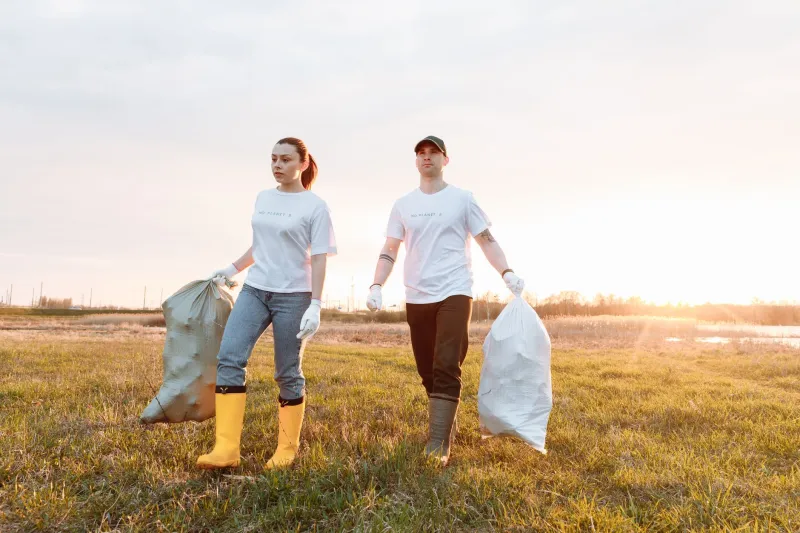
For decades, environmental monitoring in the United States has operated on a familiar architecture: regulatory agencies set the standards, permitted facilities self-report their emissions and discharges, and periodic inspections serve as the primary verification mechanism. It is a system built on institutional trust and structured compliance cycles. It is also a system with well-documented blind spots.
Across the country, a quieter form of scientific inquiry is expanding to fill those gaps. Environmental professionals—consultants, independent researchers, and academic scientists operating outside formal agency structures—are increasingly partnering with organized citizen science networks to deploy low-cost monitoring tools, aggregate community-collected data, and identify contamination signatures that neither industry nor regulators have flagged. The results are reshaping how some of the most persistent chemical exposure problems in American communities are being identified and, in some cases, addressed.
The Anatomy of a Monitoring Gap
Understanding why citizen science networks have found fertile ground requires acknowledging the structural limitations of conventional oversight. The US Environmental Protection Agency and its state-level counterparts operate under constrained budgets, fixed inspection schedules, and statutory frameworks that prioritize permitted facilities over diffuse or legacy contamination sources. Monitoring requirements are typically tied to known discharge points, meaning that cumulative loading from agricultural runoff, informal dumping, or atmospheric deposition from multiple minor sources can accumulate beneath the threshold of regulatory attention.
Self-reporting mechanisms introduce additional uncertainty. While most large industrial operators maintain rigorous internal compliance programs, the accuracy of self-reported data is inherently difficult to verify without independent measurement. In regions where agency capacity is limited and inspection frequency is low, significant intervals can pass before anomalous discharges are detected through official channels.
This is not a critique unique to any single administration or regulatory philosophy. It reflects a structural tension between the scale of industrial activity in the United States and the practical capacity of the agencies tasked with overseeing it.
What Citizen Science Networks Are Actually Measuring
The citizen science initiatives gaining traction among environmental professionals are considerably more rigorous than informal community complaint logs. Many are built around standardized sampling protocols, calibrated low-cost sensors, and georeferenced data submission platforms that allow professionals to aggregate observations across wide geographic areas.
Water quality monitoring represents one of the most active domains. Networks operating in watersheds across the Midwest and Southeast have deployed community volunteers equipped with field test kits and smartphone-integrated sensors to collect turbidity, pH, nitrate, and conductivity readings at frequencies that no agency monitoring program could sustain. When these data streams are analyzed by credentialed environmental scientists, they can reveal seasonal contamination pulses, spatial clustering near specific land uses, and trend lines that suggest ongoing rather than episodic discharge.
Air quality monitoring has seen parallel growth, particularly in communities situated near petrochemical corridors in Texas and Louisiana, as well as near agricultural processing facilities in California's Central Valley. Portable photoionization detectors and low-cost particulate sensors, when deployed across a coordinated network, can triangulate emission plumes and identify source candidates that might otherwise escape notice between formal inspection cycles.
The emerging capability to cross-reference citizen-collected field data with satellite imagery, publicly available permit records, and EPA Toxics Release Inventory filings is adding another layer of analytical depth. Environmental professionals who understand how to synthesize these heterogeneous data streams are producing assessments with genuine investigative value.
The Validation Problem and the Professional Opportunity
The most significant challenge facing citizen science networks is not enthusiasm or instrumentation—it is the credibility gap that separates community-collected data from the evidentiary standards required to trigger regulatory action or support litigation.
Data collected by untrained volunteers using consumer-grade sensors faces legitimate scrutiny. Chain-of-custody documentation, instrument calibration records, sampling methodology consistency, and quality assurance protocols are all areas where citizen-generated datasets frequently fall short of the standards that regulatory agencies and courts require. Industry representatives are well-positioned to challenge the admissibility of such data, and agencies have historically been cautious about initiating enforcement actions on the basis of monitoring that has not been conducted under approved methods.
This is precisely where credentialed environmental professionals can provide the most durable value. The role of the professional intermediary—an environmental consultant or scientist who can design citizen monitoring programs with defensible protocols, train community participants in standardized collection methods, and apply rigorous quality assurance review to the resulting data—is becoming increasingly consequential.
Professionals who position themselves in this intermediary role are not simply lending their credentials to community advocacy. They are performing a genuine scientific function: transforming raw, variable-quality field observations into structured datasets that can withstand technical scrutiny. In several documented cases, professionally validated citizen science data has been sufficient to prompt agency investigation and, in at least a handful of instances, enforcement action.
Pressure Dynamics: Industry and Agency Responses
The growth of independent monitoring networks has not gone unnoticed by corporate environmental affairs departments. Some companies operating in regions with active citizen science programs have responded by voluntarily increasing their own ambient monitoring and publishing results publicly—a recognition that community-collected data, even if imperfect, creates reputational and operational pressure that cannot be dismissed.
Regulatory agencies present a more complex picture. Some state environmental agencies have begun formal engagement with citizen science organizations, providing technical guidance on sampling methods and, in select programs, incorporating community-collected data as a screening tool to prioritize inspection resources. The EPA itself has acknowledged the potential role of citizen science in supplementing official monitoring, though formal integration into compliance frameworks remains limited and inconsistent across regions.
The tension between institutional caution and the genuine informational value of distributed monitoring is likely to persist. Agencies face legitimate concerns about data quality, legal defensibility, and the resource demands of evaluating large volumes of community-submitted observations. At the same time, the political and public health pressure generated by well-organized monitoring campaigns is increasingly difficult to ignore.
Implications for the Environmental Science Profession
For professionals in environmental and chemical sciences, the citizen science movement represents both a methodological frontier and a professional redefinition. The skills required to design defensible community monitoring programs—sensor calibration, statistical quality control, spatial data analysis, and clear communication across technical and lay audiences—are not peripheral competencies. They are becoming central to how environmental assessment is conducted in communities where institutional monitoring has proven insufficient.
Conference platforms and professional forums focused on environmental and chemical sciences have a meaningful role to play in this transition. Structured venues for sharing validated methodologies, discussing data integration frameworks, and establishing best practices for professional engagement with citizen science networks can accelerate the field's capacity to produce credible, actionable results.
The monitoring gaps that citizen science networks are attempting to fill are real. The question for the environmental science profession is not whether community-collected data has a role in the broader surveillance ecosystem, but how to ensure that professional expertise shapes that role in ways that are scientifically sound, ethically grounded, and institutionally durable.
The canaries are already in the field. The professionals who learn to interpret what they are detecting will define the next chapter of environmental monitoring in the United States.