Ground Truth: Why Static Soil Contamination Models Are Failing Agricultural Scientists—and What Dynamic Monitoring Can Fix
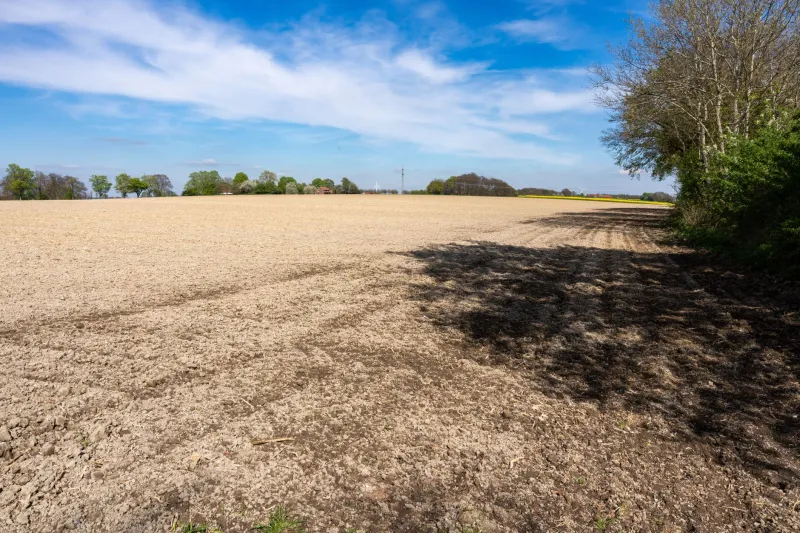
For much of the past half-century, environmental scientists approached contaminated agricultural soil the way a physician might read a single X-ray: one image, one moment in time, one set of conclusions. Samples were collected, analyzed, and used to construct contamination profiles that were then applied to remediation decisions, risk assessments, and regulatory filings—often for years afterward. The underlying assumption was one of relative chemical stability. The soil, it was believed, did not change dramatically enough between assessments to render earlier data obsolete.
That assumption is now under serious scrutiny.
A growing body of research from universities, federal agencies, and independent environmental laboratories is demonstrating that soil is not a passive medium. It is, in effect, a continuously operating chemical reactor—one whose behavior shifts substantially with temperature fluctuations, precipitation patterns, freeze-thaw cycles, and microbial activity. In agricultural regions across the United States, where these seasonal variables are pronounced, the implications for contamination modeling are considerable.
The Chemistry Beneath the Furrows
Soil chemistry is governed by a complex interplay of physical, biological, and chemical processes. What makes seasonal variation particularly consequential is the degree to which temperature and moisture alter the mobility and bioavailability of contaminants that might otherwise appear stable in a standard assessment.
Consider heavy metals such as cadmium and lead, which are common legacies of historical pesticide and fertilizer use in American farmland. Under dry, warm conditions, these metals tend to bind tightly to organic matter and clay particles, reducing their mobility in soil pore water. When temperatures drop and soils become saturated following autumn rainfall or spring snowmelt, however, pH levels shift, microbial activity changes, and redox conditions fluctuate. These transitions can liberate bound metals, increasing their concentration in leachate and raising the risk of groundwater infiltration—even in soils that appeared well within acceptable thresholds during summer assessments.
Similarly, pesticide residues—including certain organophosphates and legacy organochlorine compounds still present in older agricultural soils—undergo accelerated degradation or, conversely, stabilization depending on soil temperature and water content. A contaminant that appears to be degrading on schedule during warm months may effectively pause its breakdown during cold, dry periods, extending its environmental persistence in ways that static models do not account for.
Where Current Models Fall Short
The standard approach to agricultural soil contamination assessment in the United States typically involves periodic sampling—often annually or following a specific triggering event such as a spill or a regulatory inspection. These point-in-time measurements are then used to populate risk models that guide remediation timelines and compliance determinations.
The problem is not that these methods are poorly designed. The problem is that they were designed for a different understanding of soil behavior. When the underlying chemistry is dynamic, a static snapshot becomes an unreliable narrator. A soil parcel sampled in August may present a contamination profile that looks meaningfully different from the same parcel sampled in March—not because remediation occurred, but because the chemistry shifted with the season.
This discrepancy creates real-world consequences. Remediation strategies calibrated on summer data may underestimate contaminant mobility during spring runoff events, allowing pollutants to reach drainage ditches, irrigation canals, and ultimately surface water systems that feed into broader agricultural watersheds. In states like Iowa, California's Central Valley, and the Mississippi Delta region—where agricultural intensity and hydrological connectivity are both high—the margin for error is narrow.
Regulatory frameworks, meanwhile, have not kept pace. Most state environmental agencies still rely on assessment protocols that treat soil contamination as a fixed condition rather than a temporally variable one. This creates a structural gap between what science is revealing and what compliance standards are measuring.
Dynamic Monitoring: A Framework for the Real World
Researchers at several land-grant universities and USDA-affiliated research stations have begun developing what they are calling dynamic or temporally integrated monitoring frameworks—approaches that deliberately account for seasonal variability rather than treating it as noise to be averaged out.
At their core, these frameworks involve continuous or high-frequency sensor deployment in representative soil profiles, combined with periodic laboratory validation sampling. Electrochemical sensors capable of measuring pH, redox potential, soil moisture, and temperature in real time are increasingly affordable and field-deployable. When paired with data logging platforms and interpreted against contaminant-specific mobility models, these sensors can generate contamination profiles that reflect actual soil conditions across a full seasonal cycle rather than a single moment.
The data generated by these systems is substantially richer than what traditional grab sampling provides. Researchers have observed, for example, that contaminant mobility in tile-drained agricultural fields in the Midwest spikes during distinct two-to-four-week windows following spring thaw—windows that conventional annual sampling programs frequently miss entirely. Capturing those peaks is not merely an academic exercise; it is essential information for designing effective remediation interventions and for accurately characterizing risk to downstream water users.
Implications for Remediation Strategy
The shift toward dynamic monitoring carries direct consequences for how remediation projects are planned and executed. If contaminant behavior is temporally variable, then remediation interventions must be timed and designed with that variability in mind.
In-situ chemical treatment approaches, for instance, may be significantly more effective when applied during periods of elevated contaminant mobility, when the target compounds are more accessible to reactive amendments. Conversely, soil vapor extraction systems designed for volatile organic compounds may require operational adjustments across seasons as soil moisture content alters vapor transport dynamics.
Remediation project managers who have historically operated on fixed treatment schedules may find that temporal optimization—essentially, aligning treatment activities with the periods when soil chemistry is most amenable to intervention—can meaningfully improve outcomes without increasing costs. This is an area where collaboration between field practitioners and laboratory researchers remains underdeveloped, and one where professional forums dedicated to environmental and chemical sciences play a valuable role in accelerating knowledge transfer.
A Call for Updated Standards
The scientific case for incorporating temporal variability into soil contamination assessment is strengthening rapidly. What remains is the harder institutional work of translating that science into updated regulatory guidance, revised assessment protocols, and training programs that equip field professionals with the tools to implement dynamic monitoring in practice.
Several advocacy voices within the environmental science community have begun calling on the EPA and state environmental agencies to convene working groups specifically tasked with reviewing the temporal assumptions embedded in current soil assessment standards. Progress has been incremental, but the direction is clear.
For environmental and chemical professionals engaged in agricultural work across the United States, the immediate takeaway is practical: the data collected from a single seasonal assessment may be telling only part of the story. Designing monitoring programs that capture the full arc of seasonal chemical change is no longer a methodological luxury—it is becoming a professional and scientific necessity.
The soil, it turns out, has been running its own experiments all along. The task now is to build the frameworks sophisticated enough to listen.