Ahead of the Mandate: How Independent Testing Labs Are Writing the Rules Before Washington Does
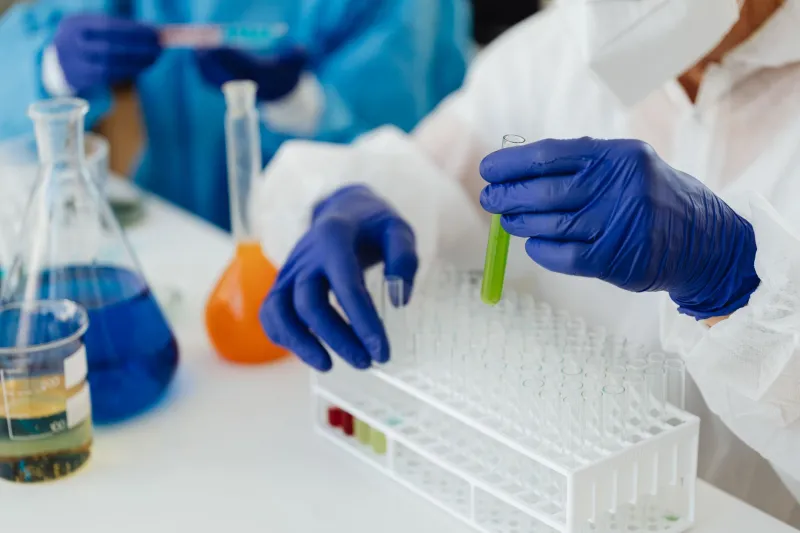
For decades, the conventional assumption in American environmental governance has followed a familiar sequence: federal agencies identify a hazard, draft rules, publish them for comment, finalize them after years of revision, and then expect industry to comply. It is a process built for thoroughness, not speed. But a quieter, less visible process has been gaining ground—one driven not by regulators but by the laboratories that test what industry produces, discharges, and handles every day.
Across the United States, third-party environmental testing laboratories have begun establishing analytical protocols, reporting thresholds, and performance benchmarks that carry genuine market weight—even when no federal mandate requires them. The result is an emergent certification landscape that is reshaping corporate chemistry practices from the bottom up, creating competitive differentiation along the way, and in some cases preventing the kind of regulatory paralysis that has frustrated environmental professionals for years.
The Credibility Vacuum That Labs Are Filling
The conditions that enabled this shift did not appear overnight. Regulatory agencies, including the EPA, have faced sustained resource constraints, political headwinds, and legal challenges that have slowed rulemaking across multiple chemical categories. PFAS regulation, for instance, has been in motion for years, with enforceable drinking water limits for certain compounds only recently finalized after extended delays. In the interim, the question of what constitutes responsible testing and disclosure was left largely unanswered at the federal level.
Independent environmental labs recognized that this gap created both a professional obligation and a market opportunity. When clients—ranging from chemical manufacturers to municipal water authorities to consumer goods companies—needed guidance on what to test for and how to interpret results, the labs providing those services became de facto arbiters of best practice. Over time, informal guidance hardened into structured methodologies. Structured methodologies attracted peer review. Peer review conferred legitimacy. And legitimacy, in a market where reputational risk is a material concern, translates directly into procurement leverage.
Today, a growing number of corporations specify third-party laboratory certification as a condition of supplier approval. The certification in question often references standards developed not by a federal body but by a consortium of accredited private labs, sometimes in collaboration with academic institutions and professional associations. These standards may exceed current regulatory requirements—or address chemical categories that regulations have not yet reached.
Market Pressure as a Regulatory Substitute
What makes this dynamic particularly significant is the mechanism driving compliance. Unlike government mandates, which depend on enforcement budgets, inspection capacity, and judicial interpretation, market-driven standards propagate through supply chain pressure. A major specialty chemical distributor that requires its suppliers to meet a third-party laboratory benchmark is effectively extending that standard across its entire vendor network without any regulatory apparatus whatsoever.
This is not an incidental feature of the model—it is the model's central engine. Environmental labs that have cultivated strong reputations for methodological rigor attract clients who then require their own partners to use similarly accredited services. The standard spreads laterally across industries faster than a federal rule could move vertically through the rulemaking process.
For chemical professionals operating in sectors where client audits and ESG disclosure requirements have become routine, the practical implications are significant. Meeting a recognized third-party benchmark can mean the difference between qualifying for a contract and being excluded from it. The financial stakes create a compliance incentive that is, in many respects, more immediate than the prospect of a regulatory penalty that may be years away.
The Methodological Contribution
Beyond their market influence, independent labs are making substantive technical contributions that deserve recognition in their own right. Several have developed analytical methods for emerging contaminants—including novel PFAS variants, microplastic sub-categories, and trace-level endocrine-disrupting compounds—that are more sensitive and reproducible than existing EPA methods. In some cases, these laboratory-developed methods have been formally adopted or referenced by federal agencies after demonstrating superior performance in inter-laboratory validation studies.
This represents a meaningful inversion of the traditional knowledge flow. Rather than regulators defining what counts as adequate measurement and labs executing accordingly, the labs are advancing the analytical frontier and regulators are, in select instances, following their lead. For environmental scientists attending conferences and reading peer-reviewed literature, this shift is already visible in the technical presentations that increasingly originate from commercial laboratory settings rather than exclusively from academic or government research programs.
Tensions on the Horizon
The picture is not without complications. A certification ecosystem built on private-sector initiative carries inherent risks that the environmental science community should examine carefully. Fragmentation is one concern: when multiple competing lab consortia develop parallel standards for the same chemical categories, the resulting inconsistency can confuse the very clients the standards are meant to serve—and may ultimately undermine the credibility of the entire enterprise.
Conflict of interest is another structural vulnerability. A laboratory that both develops a standard and profits from certifying compliance against that standard faces scrutiny that government-issued standards do not. Ensuring that private benchmark development involves sufficiently diverse stakeholder input—including public health advocates, academic researchers, and affected communities—is essential to maintaining the legitimacy these labs have worked to build.
There is also the question of what happens when private standards and eventual federal rules diverge. If the EPA finalizes a requirement that is less stringent than an established market benchmark, companies that have already invested in meeting the higher standard may resist regulatory harmonization that would erode their competitive positioning. Conversely, if federal rules exceed private benchmarks, firms relying on third-party certification as a compliance proxy may find themselves exposed.
A Model Worth Watching—and Engaging
For environmental and chemical professionals, the rise of lab-driven standardization is not merely a market curiosity. It represents a structural shift in how scientific rigor translates into industrial practice—one that bypasses traditional regulatory timelines while introducing its own accountability requirements. The laboratories at the center of this shift are, in effect, performing a public function through private means, and the quality of that function matters enormously.
Professional forums, including those that convene researchers, industry practitioners, and regulatory scientists in structured dialogue, have a meaningful role to play in ensuring that this model develops with appropriate transparency and technical integrity. Bringing laboratory-developed standards into open peer review, encouraging inter-laboratory comparison studies, and fostering honest conversation about the limits of market-driven certification are all necessary steps.
The environmental testing laboratory has always been a place where chemistry meets accountability. What has changed is the scope of that accountability—and the degree to which the lab itself, rather than the agency or the courtroom, is defining what accountability looks like.