Lost in the Literature: How Scattered Research Databases Are Stalling Chemical Science—and What Conference Platforms Are Doing About It
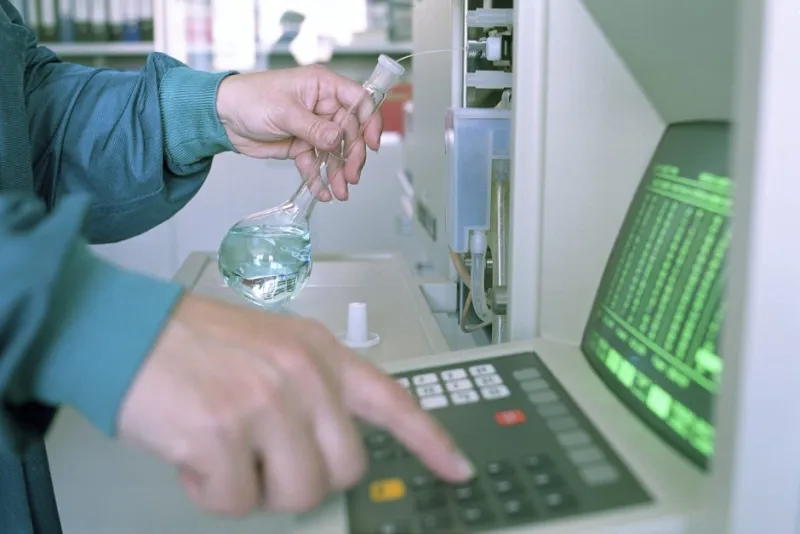
Photo: researcher searching scientific database computer library chemistry, via sandbox-cic-2021.sites.olt.ubc.ca
For a discipline that prizes precision, the environmental and chemical sciences have a surprisingly imprecise system for sharing what they know. Research findings move from laboratory notebooks to institutional preprint servers, from peer-reviewed journals to conference proceedings, and from agency technical reports to proprietary databases—each channel operating largely in isolation from the others. The result is a discovery landscape so fragmented that researchers routinely begin projects without realizing that comparable work was completed years earlier, often at another institution just a few states away.
This is not a minor inconvenience. It is a structural problem with measurable consequences for scientific progress, regulatory responsiveness, and the allocation of research funding across the United States.
The Scale of the Fragmentation Problem
The volume of published chemical and environmental research has grown dramatically over the past two decades. The number of active peer-reviewed journals covering environmental chemistry, toxicology, materials science, and related fields now runs into the thousands. Add to that figure the technical reports produced by federal agencies such as the EPA, NIOSH, and the Department of Energy, the working papers circulated through university repositories, and the unpublished datasets held by private laboratories, and the scope of the problem becomes clear.
Search engines and bibliographic databases like Web of Science, Scopus, and PubMed cover substantial portions of this literature, but none covers all of it. Metadata standards vary widely between publishers. Keywords that one researcher uses to describe a process may differ entirely from those used by a colleague working on a functionally identical problem. Abstract quality is inconsistent. And much of the gray literature—technical reports, regulatory submissions, conference proceedings—remains incompletely indexed or entirely invisible to standard search queries.
A 2021 analysis published in Scientometrics estimated that systematic duplication of research effort costs the global scientific enterprise tens of billions of dollars annually. While that figure spans all disciplines, environmental chemistry is particularly vulnerable given its reliance on site-specific data, proprietary analytical methods, and multi-agency regulatory frameworks that scatter relevant findings across non-academic channels.
When Researchers Cannot Find Each Other
The human cost of this fragmentation is less often discussed than the financial one, but it may be more consequential. Cross-disciplinary breakthroughs—the kind that emerge when a soil chemist's findings intersect with an urban hydrologist's dataset, or when an industrial process engineer discovers relevant work from an academic toxicologist—depend entirely on researchers being able to locate and engage with one another's work.
When that discovery fails, collaboration does not happen. Methodologies developed in one corner of the field are reinvented in another. Negative results, which carry significant scientific value in preventing redundant experimental paths, go unpublished and unfound. Early-career researchers, who often lack the professional networks that allow senior scientists to informally share findings, are disproportionately disadvantaged.
The consequences extend beyond the laboratory. Environmental regulatory decisions frequently depend on the best available science. When that science is inaccessible, agencies may rely on incomplete evidence bases, and the resulting standards may be weaker or less technically defensible than they should be. In a regulatory environment that is already under pressure, this is a problem the field cannot afford to ignore.
What Centralized Conference Platforms Offer
In recent years, professional congress platforms have emerged as an underappreciated solution to the metadata gap. Unlike static journal archives, conference platforms are inherently designed for active discovery. They aggregate abstracts, presentation materials, poster sessions, and supplementary datasets in a single searchable environment. They assign consistent metadata tags across submissions. And they create structured opportunities for researchers to flag their work as relevant to specific regulatory questions, industrial applications, or geographic contexts.
The ECTS Congress model, oriented around advancing environmental and chemical sciences through professional exchange, reflects this logic. When researchers submit work through a structured congress framework, their findings become part of a curated, cross-referenced record that is accessible to peers across disciplines, industries, and institutional affiliations. A remediation specialist presenting on heavy metal mobility in urban soils is, by virtue of the platform's architecture, placed in proximity to a water quality researcher examining downstream contamination pathways—even if neither individual sought out the other's work.
This is not a trivial benefit. It is, in many cases, the mechanism by which interdisciplinary insight actually occurs.
Open Access and the Metadata Standard Question
Beyond conference platforms, the broader open-access movement has made meaningful progress in improving research discoverability. Mandates from federal funding agencies, including the updated public access policy issued by the Office of Science and Technology Policy in 2022, have significantly expanded the volume of federally funded research available without paywalls. The NIH's PubMed Central and the DOE's OSTI.gov represent genuine infrastructure investments in open scientific communication.
But open access alone does not solve the metadata problem. A paper posted to an institutional repository with incomplete tagging, no ORCID identifier for its authors, and a non-standardized abstract structure remains functionally invisible to researchers who would benefit from it. The missing ingredient is not simply availability—it is findability. And findability depends on consistent, well-governed metadata standards that many publishers and repositories have yet to fully adopt.
Professional organizations in the environmental and chemical sciences are increasingly positioned to drive that standardization. By establishing submission guidelines that require structured keywords, standardized methodology descriptors, and explicit disciplinary cross-referencing, congress platforms can model the metadata practices that the broader publication ecosystem needs to adopt.
Toward a More Connected Scientific Community
The fragmentation of chemical and environmental research literature is a solvable problem—but solving it requires deliberate infrastructure investment, not simply more publication. The scientific community needs platforms that are designed from the outset to connect researchers across institutional and disciplinary boundaries, to surface relevant findings regardless of the channel through which they were originally disseminated, and to maintain living records of the field's evolving knowledge base.
Conference platforms that prioritize discovery architecture, open metadata standards, and active cross-disciplinary curation are not peripheral to this effort. They are central to it. For environmental and chemical scientists working to advance a field that directly informs public health, regulatory policy, and industrial practice, the ability to find each other's work is not a convenience—it is a professional necessity.