Reclassified Into Obscurity: How Industrial Waste Relabeling Quietly Undermines Hazardous Material Accountability
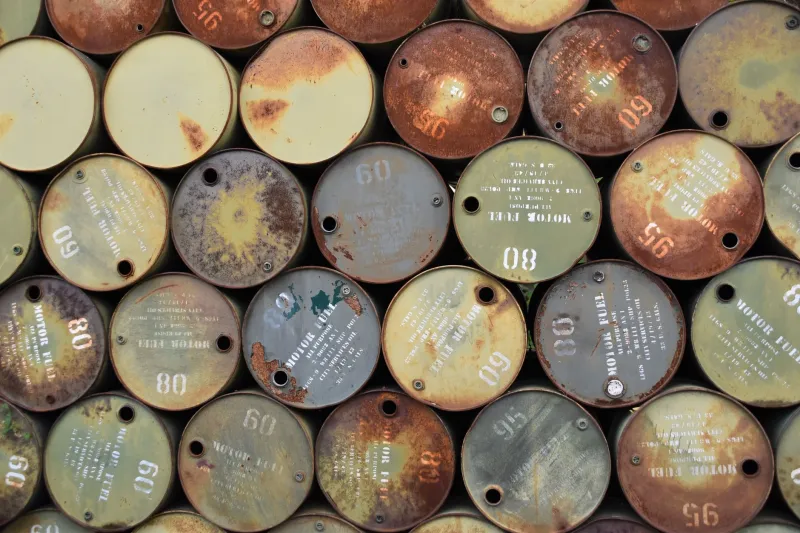
In the administrative architecture of chemical waste management, a single classification decision can determine whether a byproduct travels to a permitted hazardous waste facility or exits the regulatory system entirely. That decision—often made internally by a company's own environmental staff—carries enormous financial implications. And according to a growing number of compliance professionals, it is being made with considerably more creative latitude than federal law intends.
The practice of waste reclassification, in which industrial byproducts initially generated under conditions that would trigger hazardous designation are subsequently relabeled as non-hazardous materials, has attracted renewed scrutiny from state environmental agencies and independent auditors. While not every reclassification is improper, the volume of contested determinations surfacing in enforcement records suggests that the line between legitimate characterization and regulatory evasion is being tested with increasing frequency.
How the Definitions Become Loopholes
The Resource Conservation and Recovery Act (RCRA), administered by the U.S. Environmental Protection Agency, establishes the federal framework for hazardous waste identification. Under RCRA, a solid waste is considered hazardous if it appears on one of several EPA-maintained lists or if it exhibits one of four characteristics: ignitability, corrosivity, reactivity, or toxicity. The complexity arises not in the definitions themselves, but in the flexibility permitted in how waste streams are sampled, tested, and ultimately characterized.
Generators are largely responsible for making their own hazardous waste determinations. The EPA does not require pre-approval for most reclassification decisions, and third-party verification is neither mandated nor consistently applied. This self-certification model, while administratively practical, creates conditions in which the financial incentive to classify waste as non-hazardous—disposal costs for listed hazardous waste can run ten to twenty times higher than for conventional industrial waste—operates without an immediate countervailing check.
"The system places enormous trust in the generator's good faith," said one compliance officer at a Midwest chemical manufacturing facility who requested anonymity due to contractual restrictions. "That trust is often well-placed. But the absence of routine third-party sampling means that improper classifications can persist for years before anyone looks closely."
The Mechanics of Reclassification
Waste reclassification typically proceeds through one of several recognized pathways. A generator may argue that a previously listed waste has been sufficiently treated to no longer exhibit hazardous characteristics—a process known as "de-listing." Alternatively, companies may invoke the mixture rule exceptions or the derived-from rule in ways that regulators have contested. In some cases, byproducts are characterized as co-products or commercially viable materials, removing them from the waste classification system altogether.
This last approach—sometimes called "beneficial use" reclassification—has generated particular concern. When a chemical byproduct is designated as a marketable secondary material, it exits RCRA jurisdiction and can be transferred, stored, or processed without the safeguards that govern hazardous waste. Regulators in several states have documented instances in which materials with measurable concentrations of heavy metals or chlorinated compounds were transferred under beneficial use designations to facilities lacking the permits required for hazardous waste management.
A 2022 enforcement action in the Gulf Coast region, documented in EPA Region 6 records, involved a petrochemical processing facility that had reclassified a spent catalyst stream containing elevated levels of arsenic and chromium as a raw material supplement. The material had been transferred to a cement kiln operating under a general industrial permit. State regulators, alerted by a downstream water quality anomaly, traced the contamination pathway and found that the reclassification had been supported by a single composite sample taken under conditions that compliance investigators later described as unrepresentative of actual waste stream variability.
State-Level Enforcement and Its Limits
While the EPA sets the baseline framework, authorized states administer their own hazardous waste programs, many of which include provisions that are at least as stringent as federal requirements. In practice, however, enforcement capacity varies substantially. State environmental agencies in the South and Mountain West regions have reported significant backlogs in waste facility inspections, with some generator sites going three or more years between compliance reviews.
This creates asymmetric enforcement pressure. Large-quantity generators in well-resourced states may face rigorous annual inspections and detailed recordkeeping audits. The same class of generator operating across state lines may encounter substantially less scrutiny, particularly if the state program lacks dedicated hazardous waste compliance staff.
"Interstate chemical operations are where the enforcement gaps become most visible," noted a waste management consultant with extensive experience in multi-state compliance programs. "A waste stream that would be flagged immediately in New Jersey may travel through two other jurisdictions without triggering a single review."
The Documentation Problem
At the heart of the reclassification issue is an audit trail problem. Unlike pharmaceutical or food supply chains, where chain-of-custody documentation is subject to routine third-party review, hazardous waste characterization records are primarily self-generated and, in many states, only reviewed during the course of an inspection. Generators maintain waste determination files, but the analytical data supporting those determinations—sampling protocols, laboratory chain-of-custody forms, quality assurance records—may not be reviewed for accuracy or representativeness unless an enforcement action is already underway.
Some compliance professionals advocate for a shift toward mandatory third-party verification for waste streams above specified volume thresholds, particularly those involving characteristic waste determinations. Others point to the potential of electronic manifest systems, already deployed in several states for hazardous waste transport tracking, as a foundation for building more robust downstream verification.
A Framework Worth Examining
The scientific and professional communities working at the intersection of environmental chemistry and regulatory compliance have a meaningful role to play in addressing these structural vulnerabilities. Advances in portable analytical instrumentation now make field-based waste characterization considerably more feasible than it was when the current regulatory framework was designed. Techniques including X-ray fluorescence screening, field-deployable gas chromatography, and real-time leachate analysis could support more rigorous generator-level verification without requiring full laboratory turnaround times.
Standardizing sampling protocols for common industrial waste streams—an area where professional bodies and conference-driven research initiatives have historically made progress—could also reduce the interpretive latitude that enables mischaracterization. When the scientific basis for a determination is clearly defined, the space for opportunistic flexibility narrows.
The classification of chemical byproducts is not, in itself, a problematic process. Reclassification, when properly supported by representative analytical data and conducted in good faith, serves legitimate regulatory and commercial functions. What the current evidence suggests, however, is that the absence of systematic verification has allowed the process to function, in some cases, as a mechanism for transferring environmental liability rather than managing it. Addressing that gap will require both regulatory attention and the kind of sustained technical engagement that environmental and chemical science professionals are well-positioned to provide.