The Scale-Up Wall: Why Promising Green Chemistry Processes Rarely Survive the Leap From Laboratory to Factory Floor
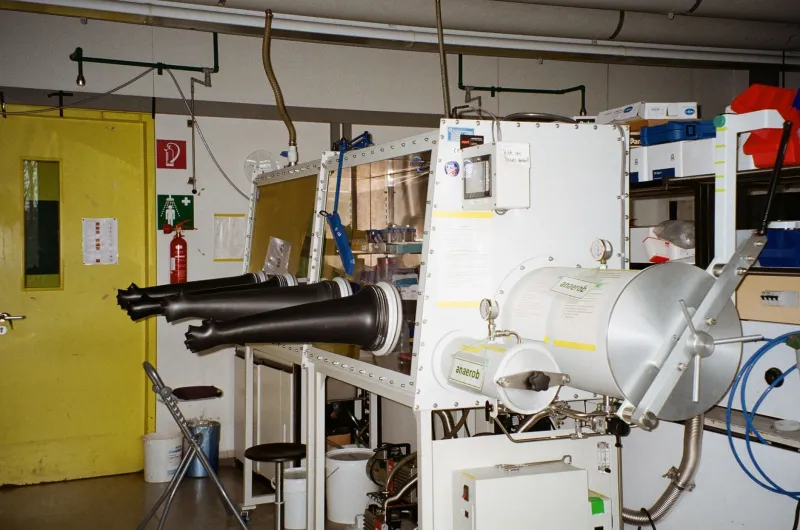
There is a particular kind of frustration that accumulates in the career of a green chemistry researcher. It arrives not at the moment of failure, but at the moment of success—when a novel solvent system, a biocatalytic reaction pathway, or a low-energy synthesis route performs exactly as designed in the laboratory, only to encounter a wall of practical obstacles the instant anyone asks what it would take to produce it at meaningful commercial volume.
This experience is common enough among sustainable chemistry professionals that it has acquired something close to its own taxonomy. Process engineers refer to the "valley of death" between proof-of-concept and pilot scale. Economists describe the "green premium" that makes clean alternatives uncompetitive against entrenched petrochemical processes. Investors speak of the "scale-up risk" that redirects capital toward incremental improvements in existing infrastructure rather than transformative new approaches. The terminology varies, but the underlying phenomenon is consistent: green chemistry innovations are being generated at a pace that the industrial system currently lacks the capacity—or, in some cases, the will—to absorb.
What the Laboratory Cannot Predict
The gap between bench chemistry and industrial chemistry is not simply a matter of multiplying quantities. Reactions that proceed cleanly in a 500-milliliter flask under carefully controlled laboratory conditions frequently behave differently when transferred to a pilot reactor measured in cubic meters. Heat transfer dynamics change. Mixing efficiency declines. Impurity profiles shift in ways that affect catalyst performance, product yield, and downstream purification requirements.
For green chemistry processes specifically, these transition challenges are often compounded by the fact that sustainable approaches frequently rely on biological catalysts, water-based solvent systems, or feedstocks derived from variable agricultural sources—all of which introduce variability that conventional petrochemical processes, optimized over decades, have largely engineered out of their operations.
"The selectivity we see in the lab is often a function of the controlled environment, not the chemistry itself," explained one process engineer at a specialty chemicals company based in the Mid-Atlantic region. "When you move to pilot scale and start dealing with real feedstock variability, the yield curves look very different. That's when the economic models fall apart."
This variability problem is particularly acute for bio-based chemical processes. Fermentation-derived intermediates, enzymatic synthesis routes, and biomass-derived solvents all depend on biological inputs whose composition fluctuates with season, geography, and agricultural practice. Building a commercially competitive process around a feedstock that varies in composition from batch to batch requires either sophisticated real-time process control or upstream standardization measures that add their own cost burden.
The Economics of Incumbency
Beyond the technical challenges, green chemistry scale-up faces a structural economic disadvantage that is rarely fully accounted for in early-stage research assessments. Conventional chemical manufacturing processes have been optimized over periods ranging from decades to more than a century. The capital equipment is largely depreciated. The supply chains are mature. The workforce is trained. The regulatory pathways are understood.
A green chemistry alternative, regardless of its intrinsic performance advantages, enters this competitive landscape with none of those accumulated efficiencies. It requires new capital investment, new supplier relationships, new process qualifications, and in many cases new regulatory approvals—all of which must be amortized against a market price set by incumbents operating with far lower marginal costs.
Federal incentive structures have attempted to address this imbalance with varying effectiveness. The Department of Energy's Advanced Manufacturing Office and the National Science Foundation's partnerships with industrial consortia have provided some funding for scale-up research, but the amounts available remain small relative to the capital requirements of commercial-scale chemical facility construction, which routinely runs into the hundreds of millions of dollars.
"Grant funding gets you to the pilot plant. It doesn't get you to the commercial facility," said a research director at a university-affiliated green chemistry center in the Great Lakes region. "The jump from a one-ton-per-day pilot to a hundred-ton-per-day commercial unit requires private capital, and private capital needs a risk profile that most green chemistry processes can't yet offer."
Infrastructure as a Hidden Barrier
One dimension of the scale-up problem that receives less attention than either the technical or economic challenges is the infrastructure question. Green chemistry processes frequently require different types of processing equipment, different utility configurations, and different material handling systems than the conventional processes they are designed to replace.
A manufacturing facility optimized for petroleum-based solvent chemistry may lack the containment systems, the temperature control infrastructure, or the materials-compatible piping required for a water-based or ionic liquid alternative. Retrofitting an existing facility to accommodate a fundamentally different process chemistry can cost nearly as much as building new, eliminating one of the most commonly cited advantages of process substitution—the ability to leverage existing capital assets.
This infrastructure mismatch is particularly pronounced in the specialty chemicals sector, where plant designs are often highly customized for specific product families. A green alternative that requires different reactor geometry, different separation technology, or different waste stream management may simply be incompatible with the physical plant in which it would otherwise be most logically deployed.
The Role of Professional Knowledge Exchange
One response to the scale-up challenge that has gained traction among practitioners is the structured sharing of process development experience across organizational boundaries. Companies that have successfully navigated the laboratory-to-pilot transition for one class of green chemistry application have accumulated practical knowledge—about equipment selection, process control strategies, feedstock qualification protocols—that could meaningfully accelerate the development timelines of others working on different applications.
Conference environments and professional networks play a meaningful role in enabling this exchange, particularly for smaller research organizations and academic groups that lack the internal process engineering resources of large chemical companies. Technical sessions focused specifically on scale-up methodology, rather than on the underlying chemistry, can provide the kind of practical orientation that laboratory-trained researchers often need when confronting industrial realities for the first time.
Several professional bodies have begun organizing working groups specifically dedicated to the transition challenges of sustainable chemistry, bringing together synthetic chemists, process engineers, regulatory specialists, and supply chain professionals in formats designed to surface practical obstacles rather than celebrate early-stage results.
Reframing the Measure of Success
Perhaps the most fundamental shift required is in how the research community measures and communicates the progress of green chemistry development. Publication metrics reward novelty at the bench scale. Funding cycles often conclude before scale-up data is available. The result is a systematic bias toward generating new laboratory demonstrations rather than deepening the development of existing ones.
Redirecting some portion of research investment toward the unglamorous but essential work of process engineering, economic modeling, and infrastructure assessment would not reduce the pace of green chemistry innovation. It would, however, improve the probability that the innovations already in hand eventually make it to the factory floor—which is, ultimately, the only place where their environmental benefits can be realized at meaningful scale.