What Burns Beneath the Surface: The Unregulated Byproduct Crisis Hiding Inside America's Thermal Waste Treatment Systems
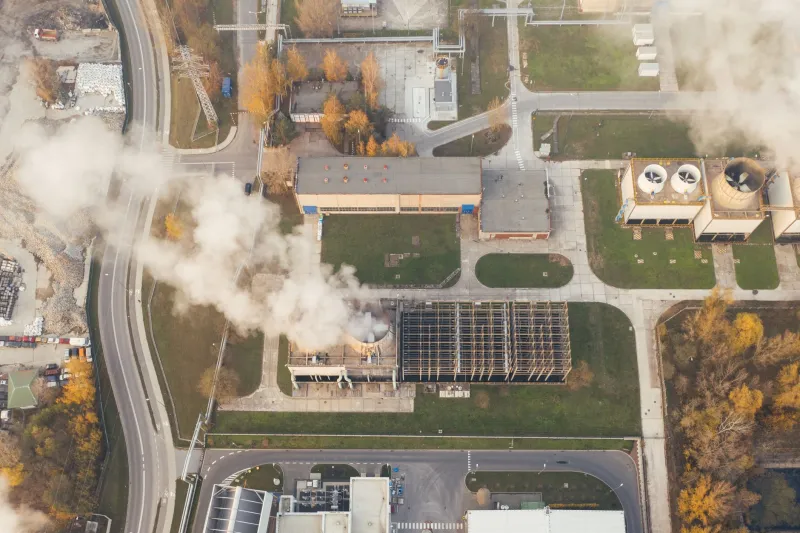
When industrial waste enters a thermal treatment system, the compounds that emerge on the other side are rarely the same ones that went in. A growing body of evidence suggests that secondary decomposition byproducts—many of them poorly characterized and absent from regulatory frameworks—are quietly accumulating in the environments surrounding waste treatment facilities, creating a chemical safety blind spot that the field has yet to fully confront.
For environmental chemists and waste management engineers working in this space, the concern is not theoretical. It is operational, daily, and increasingly urgent.
The Chemistry That Happens After the Flame
Thermal treatment of industrial waste—whether through high-temperature incineration, pyrolysis, or gasification—is predicated on the assumption that sufficient heat destroys hazardous compounds. And for many target substances, that assumption holds. Chlorinated solvents, certain heavy metal complexes, and organic pollutants can be effectively neutralized under controlled combustion conditions.
But combustion chemistry is rarely clean. The interaction of heat, oxygen, moisture, and chemically complex waste streams produces a cascade of intermediate and terminal reaction products that were never present in the original material. These include polychlorinated dibenzo-p-dioxins (PCDDs), polychlorinated dibenzofurans (PCDFs), chlorinated naphthalenes, and a range of nitrogen-containing compounds that form when organic nitrogen is oxidized under incomplete combustion conditions.
The critical issue is not that these compounds are unknown to science. It is that they are systematically underreported, inconsistently monitored, and in many cases, entirely absent from the permit conditions governing the facilities that produce them.
Reporting Gaps and Regulatory Architecture
The regulatory framework governing thermal waste treatment in the United States is primarily organized around the Resource Conservation and Recovery Act (RCRA) and the Clean Air Act, with supplementary standards issued through the National Emission Standards for Hazardous Air Pollutants (NESHAP) program. Facilities handling hazardous waste incineration are subject to Maximum Achievable Control Technology (MACT) standards, which specify emission limits for a defined list of compounds.
That list, however, was largely constructed based on the primary constituents of the waste streams being treated—not on the secondary chemistry those streams generate under thermal stress. Environmental chemists who have worked with stack testing programs at major industrial facilities describe a persistent structural problem: facilities are required to demonstrate compliance with the compounds they are expected to emit, not necessarily the full spectrum of what their processes actually produce.
This creates a reporting architecture that is technically compliant but scientifically incomplete. A facility burning halogenated organic waste may dutifully report hydrogen chloride and particulate matter emissions while generating measurable concentrations of chlorinated aromatic byproducts that fall outside its permit's monitoring requirements entirely.
The gap is not the result of bad faith on the part of facility operators in most cases. It reflects the inherent lag between evolving analytical chemistry and the regulatory cycles that incorporate new findings—a lag that, in the case of thermal decomposition byproducts, has stretched across decades.
What Ambient Monitoring Is Revealing
Independent ambient air monitoring conducted near industrial thermal treatment corridors in states including Ohio, Texas, and Louisiana has periodically surfaced compound signatures inconsistent with the permitted emission profiles of nearby facilities. Researchers analyzing these datasets have identified trace concentrations of semi-volatile organic compounds and halogenated species at fence-line monitoring stations that do not correspond to known primary waste constituents.
The challenge in attributing these detections is significant. Thermal treatment facilities rarely operate in isolation; they exist within industrial zones where multiple emission sources overlap. Establishing a clean causal chain between a specific facility's thermal processes and a detected ambient compound requires a level of source attribution rigor that standard compliance monitoring programs are not designed to provide.
This is precisely where the collaboration between waste management engineers and environmental analytical chemists becomes indispensable. Engineers who understand the process chemistry of specific thermal systems—the temperature profiles, residence times, and waste feed compositions—can generate predictive models of likely decomposition pathways. Chemists equipped with high-resolution mass spectrometry and non-targeted analytical methods can then design monitoring programs capable of detecting the compounds those models predict.
Without that cross-disciplinary communication, monitoring programs remain anchored to historical compound lists while new chemical hazards accumulate undetected.
The Non-Targeted Analysis Imperative
One of the most consequential developments in environmental analytical chemistry over the past decade has been the maturation of non-targeted analysis (NTA) methodologies. Unlike conventional targeted screening, which searches for a predefined list of analytes, NTA approaches use high-resolution mass spectrometry to characterize the full chemical complexity of a sample—identifying compounds that were not anticipated in the study design.
Applied to stack emissions and facility fence-line air samples, NTA has the potential to fundamentally reframe what is known about the byproduct profiles of thermal waste treatment. Early applications of these methods in research contexts have already identified previously unreported transformation products in incineration flue gases, including novel chlorinated phenols and brominated aromatic species arising from mixed-halogen waste streams.
The barrier to broader adoption is not technical capability. It is cost, standardization, and the absence of a regulatory mandate that would create the economic incentive for facilities to invest in comprehensive characterization. Without a requirement to look for unknown compounds, most facilities have little operational reason to do so.
Advocates within the environmental chemistry community have argued that EPA's ongoing PFAS and contaminant research programs offer a potential model: regulatory agencies can commission NTA-based characterization studies of representative facility types, use the results to update emission factor databases, and then incorporate newly identified compounds into future MACT standard revisions. The process is slow, but it represents a structured pathway from scientific discovery to enforceable oversight.
Professional Collaboration as a Mechanism for Change
The disconnect between what thermal waste treatment facilities emit and what they are required to report is not a problem that any single discipline can resolve in isolation. It requires waste process engineers who can characterize the thermal environments generating these byproducts, analytical chemists who can detect and identify them, toxicologists who can assess their health relevance, and regulatory professionals who can translate that knowledge into enforceable standards.
Structured professional exchange—through working groups, technical symposia, and cross-sector research consortia—has historically been one of the most effective mechanisms for accelerating that kind of multi-disciplinary synthesis. When engineers and chemists who rarely share professional venues are brought into sustained dialogue, the operational knowledge held by one group becomes the research hypothesis for the other.
For the environmental and chemical sciences community, the thermal decomposition byproduct problem represents both a scientific challenge and a professional accountability question. The analytical tools to characterize these emissions more comprehensively exist. The regulatory frameworks to require that characterization are within reach. What remains is the sustained, organized effort to connect the evidence already accumulating in research literature with the policy and compliance infrastructure that governs what actually gets measured—and what gets reported—at facilities across the country.
The compounds forming in those combustion chambers are not waiting for the regulatory cycle to catch up. The field should not be waiting either.