Hidden Transformations: How Chemical Degradation Products Evade Toxicity Screening and Contaminate Drinking Water Decades Later
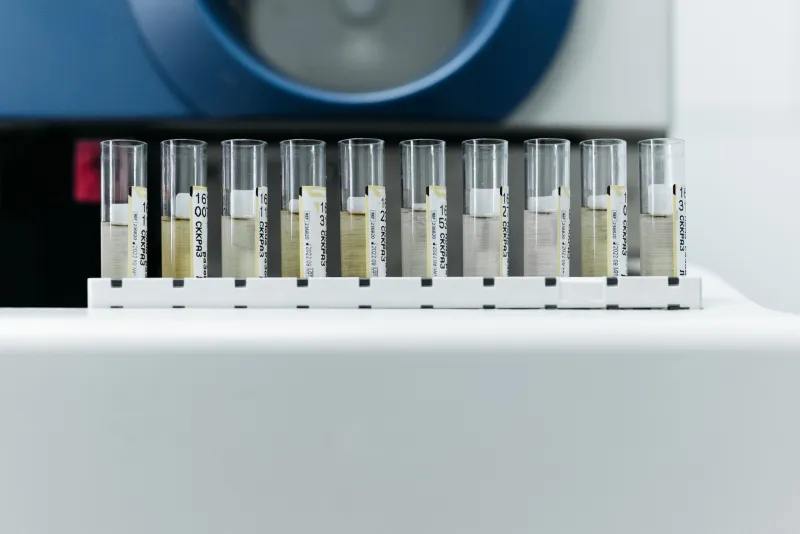
When a pesticide, industrial solvent, or pharmaceutical compound enters the environment, it rarely remains chemically intact. Microbial activity, ultraviolet exposure, hydrolysis, and oxidative soil chemistry collectively dismantle parent molecules into daughter compounds—transformation products that may be more mobile, more persistent, and in some cases more toxic than the substances from which they originated. Yet the regulatory frameworks governing environmental risk assessment were largely built around the original compound, leaving its progeny in an analytical shadow.
The consequences of that oversight are now surfacing in drinking water supplies across the United States, where compounds never listed on any monitoring schedule are triggering water quality alerts and, in some communities, long-term health investigations.
The Architecture of a Regulatory Blind Spot
The core problem is structural. When a chemical enters the federal registration or approval process—whether through the Environmental Protection Agency's pesticide review pathway or through industrial chemical evaluation under the Toxic Substances Control Act—the toxicological dossier submitted by manufacturers typically centers on the parent compound. Degradation studies are required, but the metabolites identified in those studies are not always subjected to independent toxicity evaluation with the same rigor applied to the original substance.
This creates a tiered system of scrutiny that favors the known over the emergent. A compound may clear every required benchmark at the point of approval, yet begin generating transformation products within months of environmental release—products that were never independently screened for endocrine disruption, carcinogenicity, or aquatic toxicity.
The regulatory lag is not a secret within the scientific community. Researchers have documented the phenomenon across multiple compound classes, from chlorinated herbicide metabolites to the breakdown products of certain flame retardants. What remains underappreciated outside specialist circles is the timeline involved: degradation products can take years, sometimes decades, to migrate from surface application sites through unsaturated soil zones into the saturated aquifer systems that feed municipal wells.
Case Studies in Delayed Emergence
One instructive example involves chlorothalonil, a broad-spectrum fungicide widely used in US agriculture for decades before the European Union moved to restrict it. American researchers subsequently identified that chlorothalonil sulfonic acid—a primary degradation product—was appearing in groundwater monitoring wells at concentrations exceeding those of the parent compound itself. Chlorothalonil sulfonic acid had not been the focus of the original approval toxicology and, critically, was not included in routine well monitoring protocols.
A parallel pattern emerged with certain nitrosamines formed during the chlorination of drinking water when specific precursor compounds—many of them pharmaceutical metabolites excreted into wastewater—interact with disinfection chemistry. N-nitrosodimethylamine and related compounds were not anticipated as disinfection byproducts under the original regulatory models that governed treatment plant design. Their appearance required an almost complete recalibration of how utilities assess treatment efficacy.
Both cases share a common thread: the transformation product emerged from a process that was scientifically foreseeable but institutionally invisible because the monitoring infrastructure had been built around the parent compound.
Why Predictive Modeling Has Struggled to Keep Pace
Environmental fate modeling—the computational discipline that attempts to project how a compound will behave as it moves through soil, water, and atmospheric systems—has grown substantially more sophisticated over the past two decades. Software platforms can now incorporate soil organic matter content, pH gradients, microbial community profiles, and hydrological residence times to generate degradation pathway predictions.
However, those predictions are only as reliable as the underlying mechanistic data, and for many commercially active compounds, that data is incomplete. Transformation pathways branch. A single parent molecule may generate a dozen metabolites depending on environmental conditions, and each of those metabolites may itself degrade into secondary products. The combinatorial complexity quickly outpaces both computational capacity and empirical validation datasets.
Furthermore, metabolites that form under laboratory conditions may differ meaningfully from those generated in actual soil systems, where microbial consortia and mineral surfaces introduce reaction pathways that controlled experiments do not replicate. This laboratory-to-field translation problem is one that environmental chemists are actively working to address, but it represents a persistent limitation in any predictive framework.
Analytical Approaches Gaining Traction in Forward-Thinking Laboratories
Despite the structural challenges, a set of analytical strategies is gaining traction among environmental laboratories seeking to identify transformation products before they become public health events.
Non-target screening using high-resolution mass spectrometry has emerged as perhaps the most consequential methodological advance. Unlike conventional targeted analysis, which searches for pre-identified compounds against a reference library, non-target screening captures the full mass spectral fingerprint of a water or soil sample and applies machine learning algorithms to flag signals that deviate from baseline. Transformation products with no entry in existing databases can be detected, characterized, and subjected to structural elucidation—though the process remains resource-intensive and requires significant analytical expertise.
Suspect screening, a hybrid approach between targeted and non-target methods, uses computational predictions of likely degradation pathways to generate a candidate list of transformation products, which analysts then search for in environmental samples. This approach is more efficient than fully open-ended non-target screening and is increasingly being incorporated into groundwater monitoring programs at facilities subject to voluntary or mandatory environmental stewardship commitments.
Passive sampling technologies, deployed directly in aquifer monitoring wells or surface water bodies over extended periods, are also improving the detection of low-concentration transformation products that intermittent grab sampling routinely misses. Because passive samplers accumulate compounds over weeks or months, they are particularly well-suited to identifying degradation products whose environmental concentrations remain below conventional detection thresholds during any single sampling event.
What Regulatory Reform Would Require
Correcting the metabolite blind spot at a systemic level would require changes at multiple points in the regulatory architecture. Toxicological dossiers submitted for new chemical approvals should include independent hazard characterization for major predicted transformation products, not merely their identification. Monitoring schedules for groundwater and drinking water systems should be periodically revised to incorporate compounds flagged through non-target screening campaigns rather than relying exclusively on historical target lists.
Some environmental scientists have called for a tiered metabolite review system within existing EPA frameworks—one that categorizes transformation products by environmental persistence, mobility, and preliminary hazard indicators, triggering proportionate levels of additional scrutiny. Such a system would not require wholesale regulatory overhaul but would institutionalize the kind of anticipatory chemistry that currently exists only in the most well-resourced research programs.
Professional societies and conference platforms focused on environmental and chemical science have a role to play as well. Elevating metabolite formation and transformation product toxicology as distinct research priorities—through dedicated symposia, peer-reviewed special issues, and cross-disciplinary working groups—can accelerate the translation of laboratory advances into regulatory practice.
The Aquifer Has a Long Memory
Groundwater systems are unforgiving archives. Compounds that entered the subsurface years or decades ago continue to migrate, transform, and re-emerge at points far removed from their original source. The science of environmental fate has matured considerably, but the institutional systems designed to protect drinking water supplies have not kept pace with what chemists now understand about the downstream lives of the molecules we release.
Addressing the phantom metabolite problem is not a matter of regulatory ambition alone. It requires sustained investment in analytical infrastructure, a willingness to expand the boundaries of what counts as a regulated contaminant, and a scientific community committed to making the invisible legible before it becomes irreversible.