Instrument Operators Wanted: The Quiet Crisis Undermining Analytical Chemistry in Environmental Labs
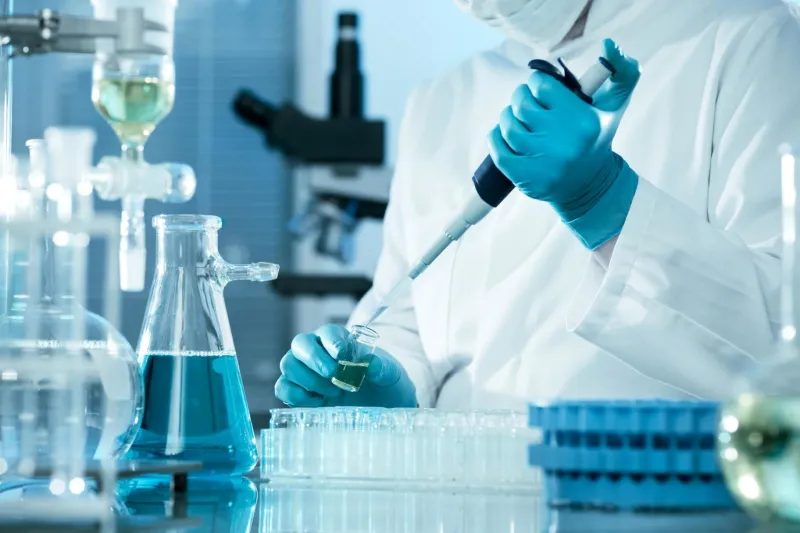
Photo: laboratory scientist operating mass spectrometry instrument analytical chemistry, via pixnio.com
Walk into almost any mid-sized environmental testing laboratory in the United States today and you are likely to encounter the same paradox: sophisticated analytical instrumentation sitting idle or underutilized not because of budget constraints, but because there is no one sufficiently trained to operate it. The shortage of qualified spectroscopy technicians and analytical instrument operators has evolved from a background concern into a genuine operational emergency for laboratories that underpin environmental monitoring, regulatory compliance, and independent research alike.
This is not a problem confined to a handful of niche facilities. From inductively coupled plasma mass spectrometry (ICP-MS) systems used to detect trace metals in drinking water to gas chromatography–mass spectrometry (GC-MS) platforms deployed in industrial emissions testing, the instruments at the core of modern environmental chemistry require operators who can do far more than press a button. They must calibrate systems, troubleshoot matrix interferences, validate methods against EPA-approved protocols, and interpret spectral data with sufficient rigor to produce results that will withstand regulatory scrutiny. That combination of technical depth and practical judgment is, by most accounts, increasingly rare.
What Is Driving the Shortage
The roots of this workforce bottleneck run through several converging channels. First, the demographic reality: a substantial cohort of experienced analytical chemists who built their careers during the expansion of environmental regulation in the 1980s and 1990s is now approaching retirement age. Their institutional knowledge—accumulated over decades of instrument operation, method development, and laboratory troubleshooting—is not easily transferred through a training manual or a two-day onboarding session.
Second, the educational pipeline has not kept pace with the sophistication of modern instrumentation. Many community college and vocational programs that once produced entry-level laboratory technicians have either eliminated their analytical chemistry tracks or failed to update curricula to reflect current instrument generations. A student graduating from a program that emphasized classical wet chemistry techniques may arrive at a modern environmental lab with foundational knowledge but minimal exposure to the hyphenated techniques—LC-MS/MS, ICP-OES, or FTIR—that now dominate routine analysis.
Third, certification pathways specific to analytical instrumentation have developed unevenly across the profession. While organizations such as the American Chemical Society and the National Environmental Laboratory Accreditation Program (NELAP) provide frameworks for laboratory quality assurance, there is no universally recognized credential that signals competency in, say, operating a high-resolution mass spectrometer in an environmental context. The absence of a standardized benchmark makes hiring decisions more difficult and leaves employers without a reliable filter for distinguishing genuinely qualified candidates from those with superficial familiarity.
Turnover as an Amplifier
The shortage is compounded significantly by retention failures. Environmental testing laboratories, particularly those operating in the contract testing sector, have historically offered compensation structures that struggle to compete with pharmaceutical, biotechnology, or petrochemical employers who require the same skill sets. A trained GC-MS operator who develops proficiency in a contract environmental lab may find that their newly acquired credentials open doors to substantially better-compensated positions in adjacent industries—and many are taking those opportunities.
Industry surveys conducted in recent years consistently report annual turnover rates in environmental laboratory settings ranging from 20 to 35 percent among instrument operators and junior analytical staff. Each departure triggers a costly cycle: recruitment, onboarding, instrument-specific training, and a period of reduced throughput while the replacement technician reaches operational competency. For smaller independent laboratories, a single unexpected resignation can delay sample turnaround times by weeks and, in some cases, jeopardize accreditation status if staffing gaps affect quality control documentation.
The downstream effects on data quality are not hypothetical. Instrument operators who are inadequately trained or perpetually learning on the job are more likely to miss calibration drift, misidentify spectral interferences, or apply method parameters incorrectly. In an environmental monitoring context, these errors translate into compromised datasets that can obscure contamination trends, produce false negatives in regulatory submissions, or require costly re-analysis.
Professional Organizations Enter the Picture
The scientific community has not been entirely passive in the face of these pressures. Several professional organizations and conference networks have begun treating workforce development as a core programmatic priority rather than a peripheral concern. At recent gatherings focused on environmental and analytical chemistry, dedicated sessions on laboratory career pathways, apprenticeship models, and instrument-specific training curricula have drawn attendance that rivals traditional research presentation tracks—a signal that practitioners recognize the urgency.
Some regional laboratory associations have begun piloting structured mentorship programs that pair retiring senior analysts with early-career technicians, creating formal mechanisms for knowledge transfer that go beyond what standard employment relationships typically provide. Others are working with instrument manufacturers to develop standardized operator competency assessments tied to specific platforms, which could eventually form the basis of a more coherent credentialing ecosystem.
At the federal level, there are early-stage conversations within EPA's Office of Research and Development about whether workforce standards for environmental laboratory personnel should be more explicitly incorporated into laboratory accreditation criteria. Such a move would not resolve the shortage overnight, but it would create regulatory incentives for laboratories to invest in structured training and documentation of operator qualifications.
What the Field Needs Next
Addressing the spectroscopy skills gap in any durable way will require coordination across sectors that have historically operated in relative isolation from one another. Academic institutions need industry input to redesign laboratory science curricula around instruments that are actually in use. Professional organizations need to accelerate the development of stackable, portable credentials that recognize competency in specific analytical techniques. Employers need to reconsider compensation and career progression structures that are currently accelerating attrition.
Conference environments offer one underutilized lever. When practitioners across the spectrum of environmental and chemical science gather to share research and methods, they create natural opportunities for the kind of informal skills transmission and professional network-building that formal training alone cannot replicate. Expanding the workforce development component of these gatherings—through hands-on instrument demonstrations, structured mentorship sessions, and open dialogues about training gaps—could meaningfully accelerate the field's response.
The instruments themselves are not the constraint. They are more capable, more sensitive, and more automated than at any previous point in the history of analytical chemistry. The constraint is human. And until the profession treats that reality with the same urgency it applies to method development or regulatory compliance, the gap between the data environmental science needs and the data it can reliably produce will continue to grow.